

Some parents have mentioned bedtime routines can sometimes be a challenge at home, so here is some information that might help.
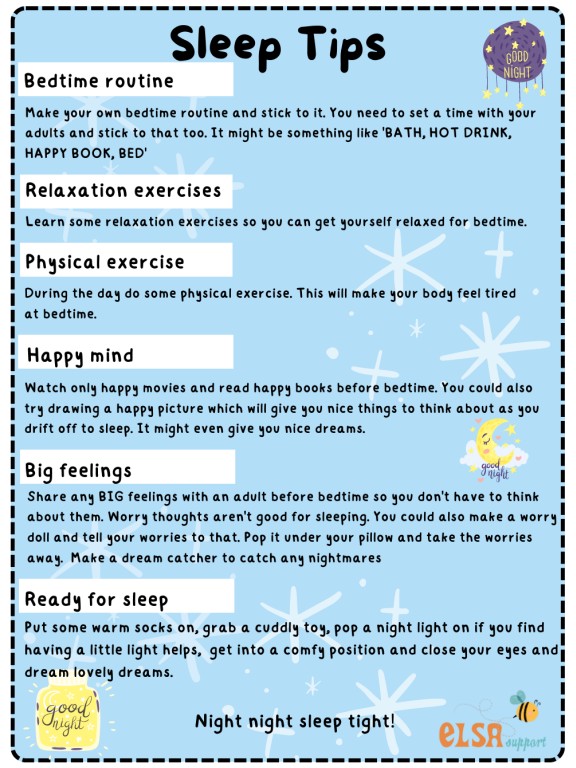
And here is some information shared on the BBC Tiny Happy People website.
Tips for settling children at bedtimes and setting a bedtime routine
1. Create a clear, easy to follow bedtime routine.
- Do the same relaxing things in the same order, at the same time every night. These could include a warm bath, dimming the bedroom lights, and reading a story together quietly.
- Try to avoid screens for an hour before bedtime, and make sure there’s no TV or tablet on in the room when they’re going to sleep.
2. Be prepared for bedtime challenges.
- If you think about sticking points in advance you can pre-empt the things they’ll say ‘no’ to. How about encouraging them by making a reward chart for when bedtime tasks are fuss-free?
- If they know from the start that a drama-free toothbrushing means they can hear their favourite story, they are more likely to co-operate. (We use the Hey Duggee Toothbrush Song if it helps at toothbrushing time)
3. Help them to recognise when they may be sleepy.
- Talk to them in simple words to help them spot the signs themselves. You could say ‘You look sleepy’ or ‘those yawns tell me it’s bedtime.’
- Look out for these signals yourself, whether it’s yawning, rubbing their eyes or getting emotional. Talk with your child about these signs and how sleep will help them feel better.
Created with help from child psychologist Dr Claire Halsey and child development researcher Dr Michelle Peter.
The above is taken from the Tiny Happy People BBC website and also recommended by Starting Reception. Starting Reception | About
Baby and toddler bedtime routine: Top tips for parents – BBC Tiny Happy People
A good nights sleep is so important for your child’s physical and mental health and also for your own!
If you need any further advice get in touch with your health visitor or I can get in touch with our School Health contact, Lindsey Smith.