

Welcome to the Early Years Foundation Stage at Newham Bridge Primary School
At Newham Bridge Primary School, we believe that all children deserve the care and support they need to have the best start in life; we aim to provide the best early learning to help fulfil your child’s potential.
We pride ourselves on getting to know our children, what they like, what they can do and what they know. This helps to ensure that our children learn from their own starting points. We provide opportunities for our children to develop key skills and make progress within an enabling environment for all. We aim to provide our children with a holistic curriculum that will help to develop resilience, endurance and a sense of independence.
We aim to inspire our children to learn with curiosity, energy and enthusiasm. We encourage them to apply their knowledge to a range of situations, making links and explaining their ideas and understanding.
During their time in our Early Years Foundation Stage (EYFS), our children make good progress towards the national expectation for a Good Level of Development. We believe that the good standards our children achieve, are due to our enriched, progressive skill-based curriculum and enabling environment. We encourage all our children to ENJOY, INSPIRE and ACHIEVE.
Laying the Foundations of Learning
The EYFS curriculum builds strong foundations through three Prime Areas: Communication and Language, Physical Development and Personal, Social and Emotional Development. These underpin learning across the Four Specific Areas of learning: Literacy, Mathematics, Understanding the World and Expressive Arts and Design.
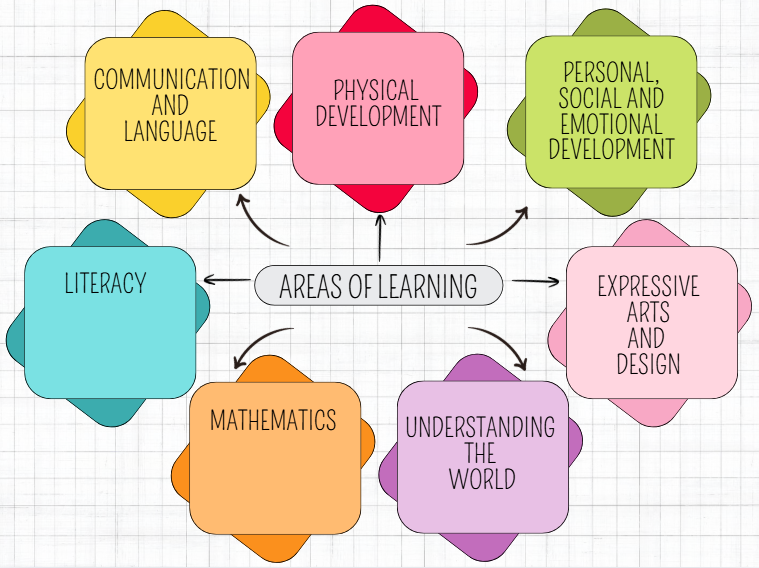
We aim to deliver a holistic curriculum, where our practice lays the foundations with the Prime Areas and then children can then apply these skills to develop within the Specific Areas. Our curriculum supports and challenges all of our children. We take into consideration the individual needs, interests, and development of our children and help them to prepare for their next steps in learning.
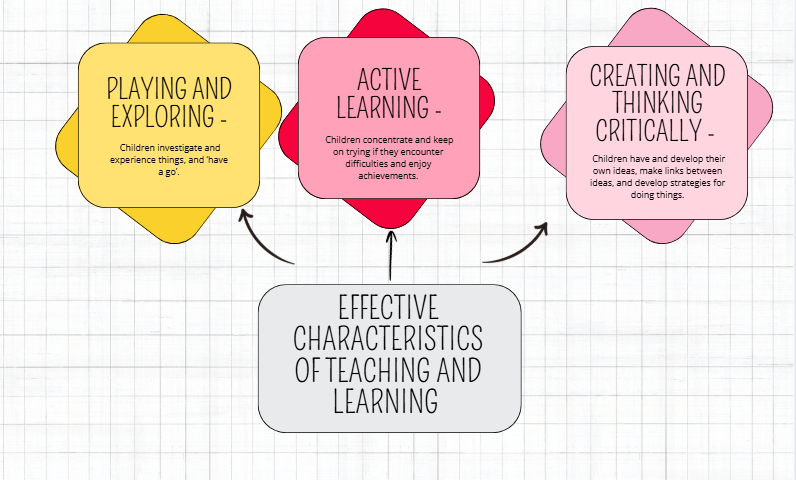
In planning and guiding what our children learn, we reflect on starting points and different rates of development and we adjust our practice to suit our children’s needs. We consider the three characteristics of effective teaching and learning, which are:
Communication and Oracy
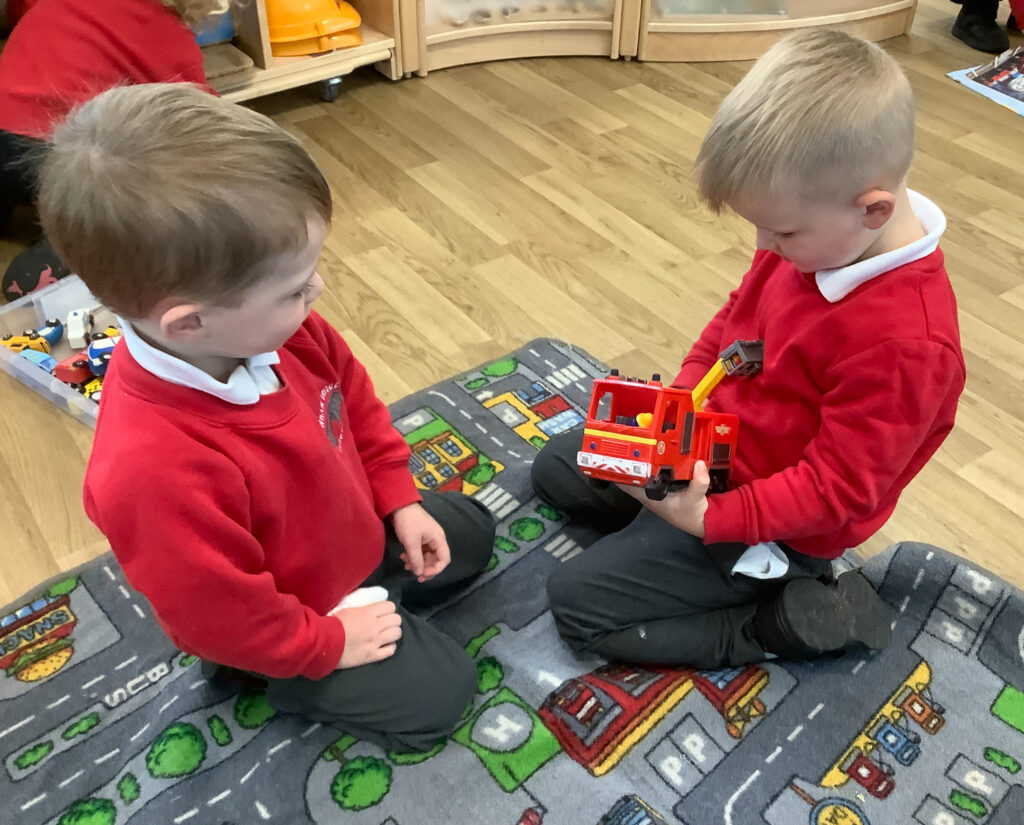
The development of the spoken language underpins all areas of learning and development. Back and forth interactions from an early age form the foundations for development and we believe high quality interactions throughout the day are vital. We use the ShREC approach, which is designed to engage in language-rich, child-led conversations rather than just talking to or at our children. It helps to build vocabulary, thinking skills, and emotional well-being We also STRIVE FOR FIVE; by encouraging five quality back and forth interactions.
We provide opportunities to use and embed new words in a range of contexts, through stories, role play, sharing ideas and conversation.
Reading
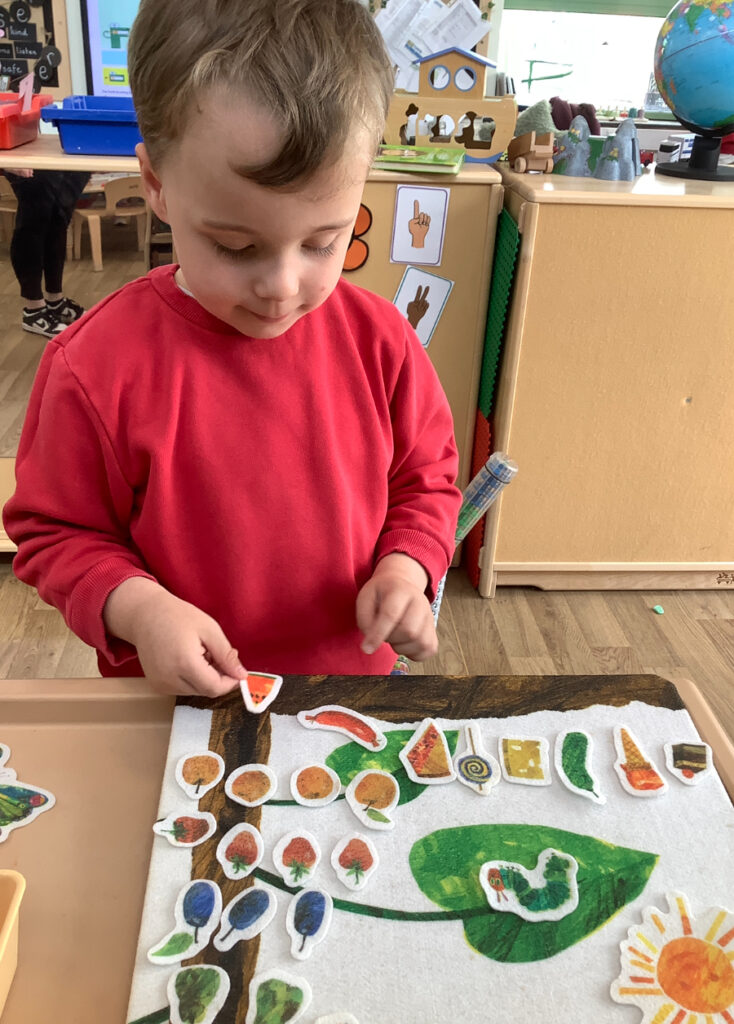
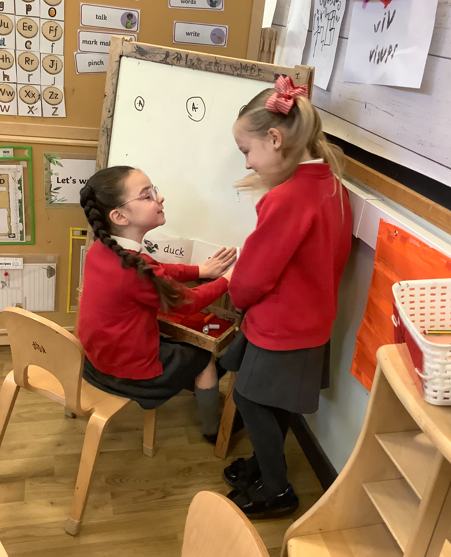
To support Communication and Oracy, we also believe that quality reading time is vital in the Early Years, supporting children’s language, communication and literacy development. Our children experience quality stories, book talk, songs and rhymes. Reading familiar texts also helps our children to develop vocabulary, comprehension, confidence and a love of reading. We use a systematic approach to teaching phonics and follow the Read, Write Inc scheme. This helps our children make good progress with reading and also provides strong foundations for future learning.
We encourage a love of reading with parents and carers throughout the Early Years and beyond. We update them with Reading Round Up and hold regular reading events, including our very popular weekly Come and Read in both Nursery and Reception.
We have adopted the RWInc. systematic synthetic phonics programme. To find out more, visit our Phonics Page.
Personal, Social and Emotional Development
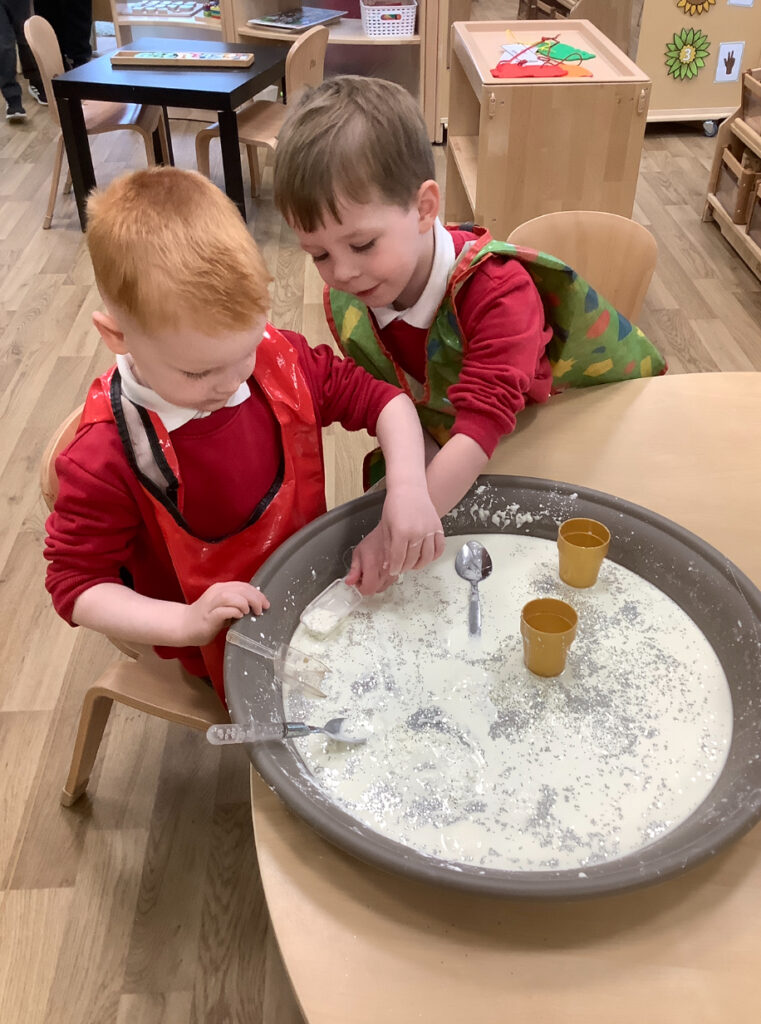
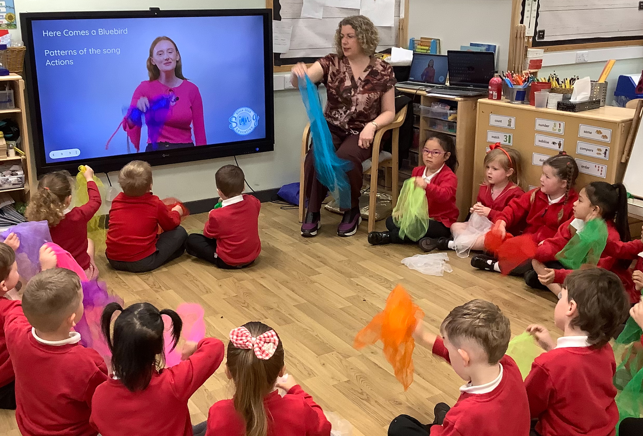
We believe that Personal, Social and Emotional Development (PSED) also underpins children’s overall development. It helps our children to build positive relationships with staff and their peers and develop self confidence. They begin to talk about and manage their feelings and begin to understand behaviour expectations. Our children learn to co-operate, share and become more independent; they do this through nurturing interactions, play and consistency across the Early Years. Strong PSED supports our children’s wellbeing, resilience and readiness for learning, this then enables them to engage positively with others and thrive both socially and academically.
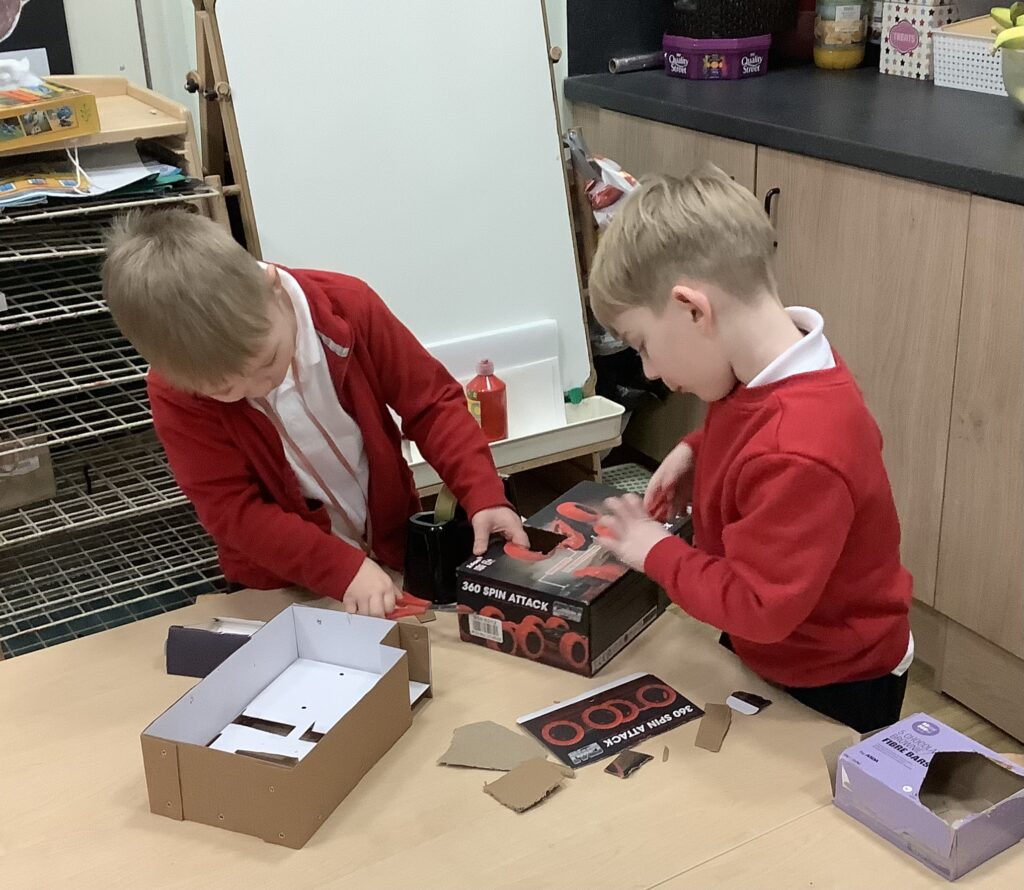
Enabling Environments
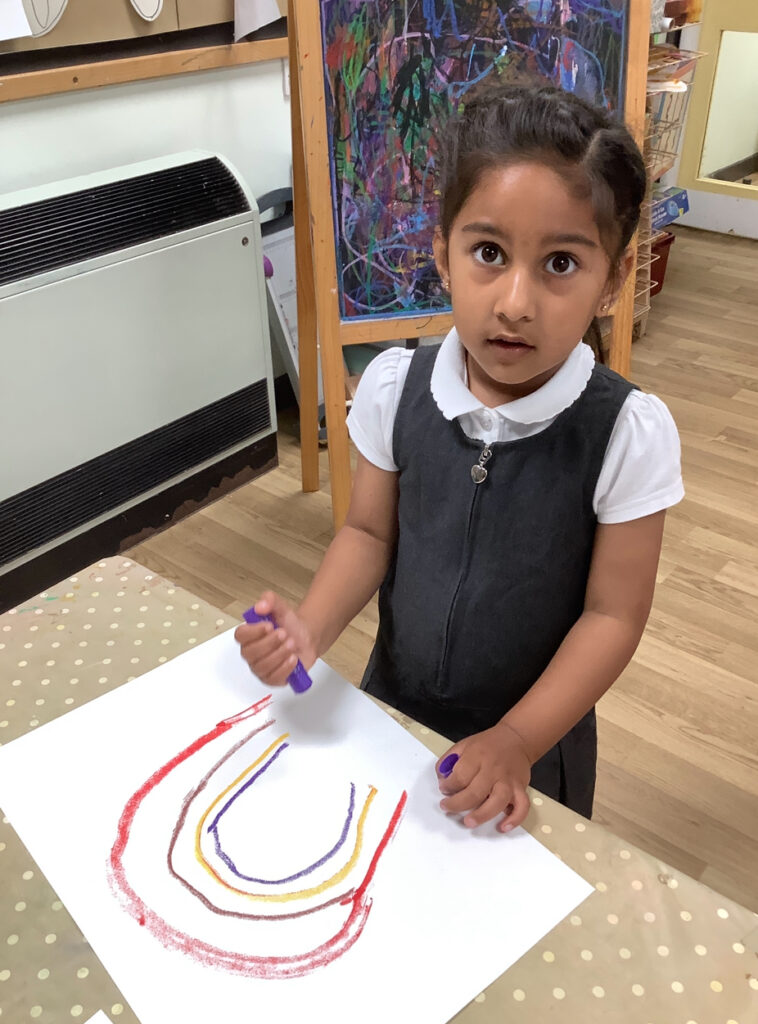
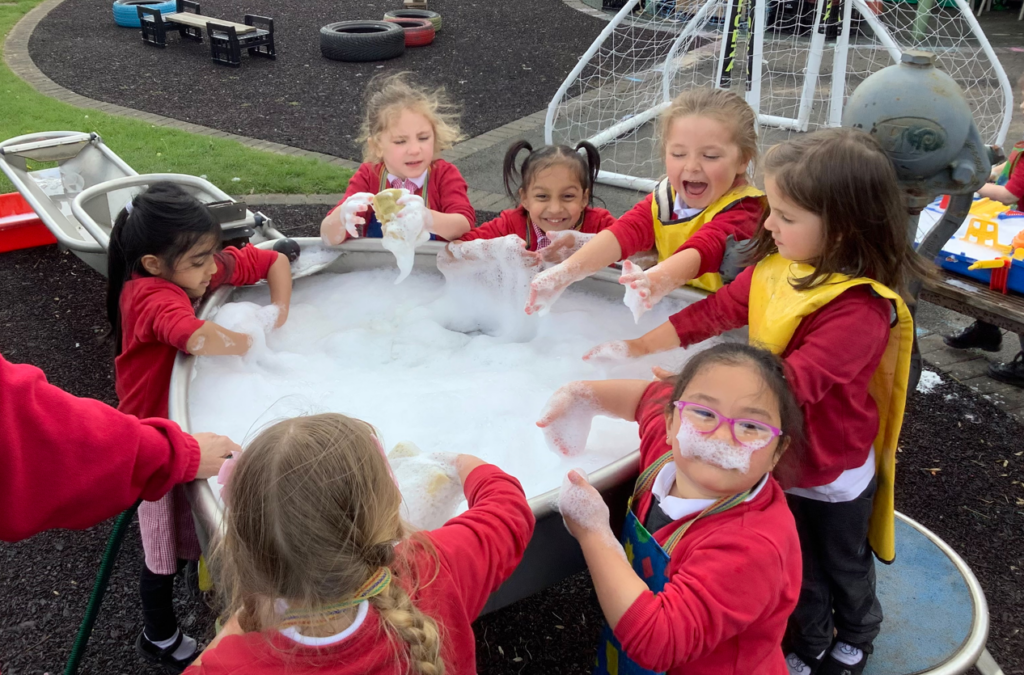
Quality indoor and outdoor environments in the Early Years are vital in supporting our children across all areas of the curriculum. We provide progressively skill-based spaces to encourage our children to explore and create independently.
Curriculum Goals
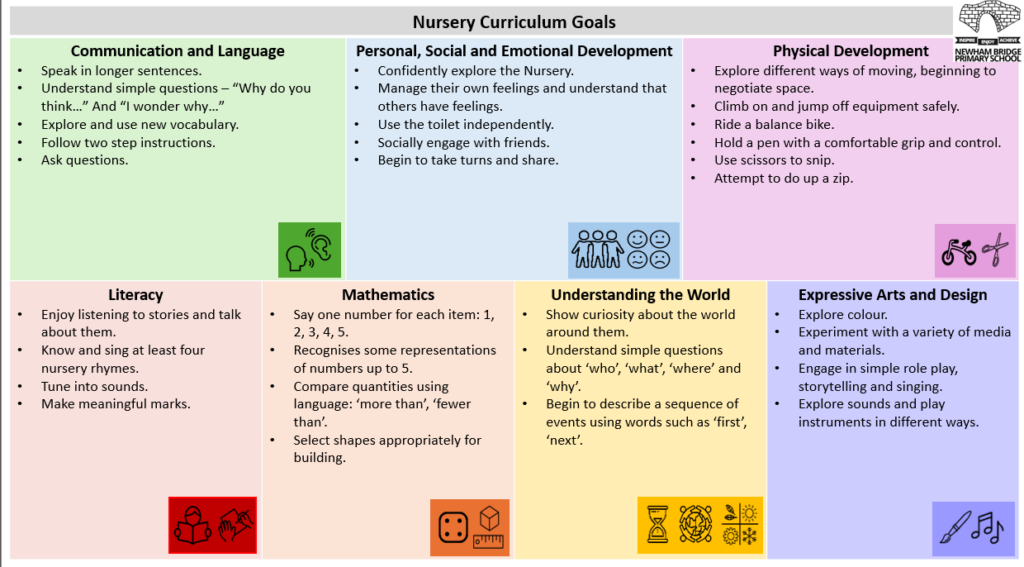
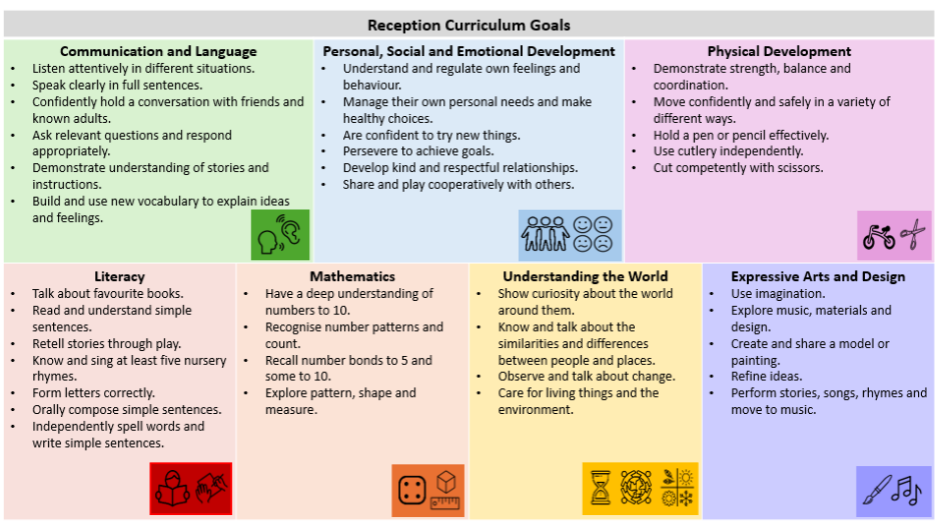
Our whole school vision and values work alongside our Nursery and Reception curriculum goals. These goals reflect the individuality of our children and provide the foundational knowledge and skills needed for them to thrive and be ready to access our KS1 curriculum when they move into Year One.
Supporting Documents